


Cable glands are essential components in any wiring system—they secure cables, provide environmental sealing, and ensure grounding (when using metal variants). The material you choose for your cable gland directly impacts its performance, durability, and safety, especially in harsh or specialized environments.
With so many material options—brass, stainless steel, aluminum, nylon, PVC—it’s easy to feel overwhelmed. This guide breaks down the core knowledge you need to select the right material, plus answers to the most common FAQs. We also include insights from Hoonsun, a trusted cable gland manufacturer with nearly 20 years of industry experience, to help you make practical, cost-effective choices.
Before diving into specific materials, start with these key factors—they will guide your selection and avoid costly mistakes:
1. Environmental Conditions: Temperature range (extreme cold/hot), humidity, salt spray, chemical exposure, and dust levels. These are the biggest drivers of material choice.
2. Mechanical Requirements: How much stress will the gland endure? Vibration, impact, and cable pull force all matter—metal glands are stronger than plastic ones.
3. Electrical Needs: Do you need grounding, EMI shielding, or insulation? Metal glands provide grounding/shielding; plastic glands offer superior insulation.
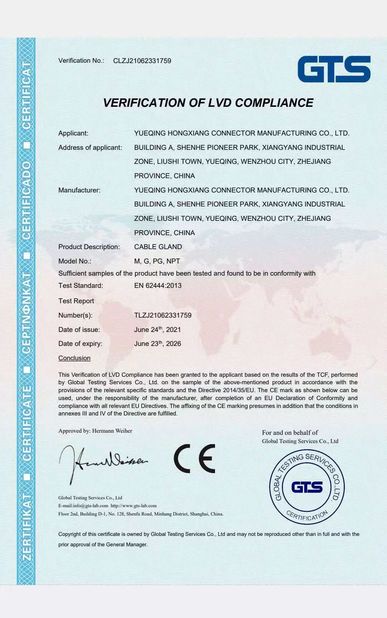
4. Certifications: Industry standards (UL, CE, ATEX, IECEx) may require specific materials (e.g., explosion-proof areas need certified metal glands).
5. Cost & Longevity: Balance upfront cost with long-term maintenance. A cheaper material (e.g., PVC) may need frequent replacement in harsh environments, while a premium material (e.g., 316L stainless steel) will last longer.
Metal glands are preferred for high-strength, grounding, and harsh environment applications. They are durable, conductive, and often meet strict industry certifications.
Brass & Nickel-Plated Brass
Brass is the most common metal for cable glands, thanks to its balanced performance and affordability. It’s a copper-zinc alloy with good mechanical strength, flexibility, and grounding capability—critical for industrial wiring.
Nickel-plated brass adds a protective layer that improves oxidation and corrosion resistance, making it suitable for outdoor or moderately humid environments. Bare brass works well for indoor, dry, or mildly corrosive areas.
Key Applications: General industrial, automation, building wiring, indoor low-voltage systems.
Hoonsun Note: Our brass and nickel-plated brass cable glands meet UL/CE standards, feature IP68 protection, and offer customizable thread sizes to fit different cable specifications—ideal for standard industrial and commercial projects.
316L Stainless Steel
316L stainless steel is the gold standard for harsh environments. It contains molybdenum, which enhances chloride and chemical resistance—making it resistant to saltwater, acids, and industrial chemicals. It also maintains strength in extreme temperatures (-40°C to +150°C) and resists vibration.
Unlike 304 stainless steel, 316L is better suited for marine, coastal, and chemical processing applications where corrosion is a major risk.
Key Applications: Marine (ships, offshore platforms), petrochemical plants, food processing (wash-down areas), coastal infrastructure, heavy industry.
Hoonsun Note: Our 316L stainless steel cable glands include marine-specific and explosion-proof (ATEX/IECEx) versions, all with IP68 waterproofing. They are designed for long-term reliability in the harshest conditions, reducing maintenance costs.
Aluminum Alloy
Aluminum is lightweight, cost-effective, and easy to machine—making it a good choice for applications where weight matters. It has decent thermal and electrical conductivity, but its corrosion resistance is limited (even with anodization).
Aluminum glands are not suitable for marine or chemical environments, as they will oxidize and degrade over time.
Key Applications: Indoor low-voltage wiring, commercial buildings, light industry, dry environments.
Hoonsun Note: Our anodized aluminum cable glands feature improved surface protection, making them ideal for light industrial and indoor applications where cost and weight are priorities.
Plastic glands are lightweight, insulating, and affordable—perfect for mild environments and low-voltage applications. They do not conduct electricity, so they are ideal for scenarios where insulation is critical.
Nylon (Polyamide: PA6, PA66)
Nylon (especially PA66) is the most popular engineering plastic for cable glands. It offers excellent impact resistance, abrasion resistance, and resistance to oils and many chemicals. UV-stabilized nylon can withstand outdoor exposure without aging or brittling.
PA66 is heat-resistant (up to 100°C) and suitable for a wide range of indoor and outdoor applications, including renewable energy.
Key Applications: Renewable energy (solar, wind), automation, indoor/outdoor low-voltage, commercial wiring.
Hoonsun Note: Our PA66 nylon cable glands are RoHS/UL certified, IP68 rated, and available in reinforced versions for outdoor and solar installations—designed to withstand UV exposure and extreme temperature swings.
PVC
PVC is the most economical plastic option, but it has significant limitations. It has poor heat resistance (max long-term temperature: 60°C), is prone to aging and brittleness outdoors, and is not resistant to oils or chemicals.
PVC is only suitable for simple, mild scenarios where cost is the primary concern.
Key Applications: Residential lighting, office wiring, indoor dry low-voltage systems.
Hoonsun Note: Our PVC cable glands are a cost-effective solution for basic indoor wiring, with strict quality control to prevent premature aging.
| Material | Corrosion Resistance | Temperature Range | Key Advantages | Best For |
|---|---|---|---|---|
| Brass | Moderate | -20°C to +100°C | Cost-effective, good grounding | General industrial, indoor |
| Nickel-Plated Brass | Good | -20°C to +100°C | Anti-oxidation, outdoor-friendly | Outdoor, mild salt spray |
| 316L Stainless Steel | Excellent | -40°C to +150°C | Harsh environments, durable | Marine, chemical, heavy industry |
| Aluminum Alloy | Low | -20°C to +80°C | Lightweight, low-cost | Indoor, light industry |
| PA66 Nylon | Good | -40°C to +100°C | Insulating, UV-resistant | Renewable energy, outdoor |
| PVC | Low | 0°C to +60°C | Low-cost, easy to install | Indoor, basic wiring |
Q1: Can I use brass cable glands in marine environments?
A: No. Brass has poor resistance to saltwater and salt spray, so it will corrode quickly in marine environments. Always use 316L stainless steel for marine applications (ships, offshore platforms, coastal areas).
Q2: Is nylon suitable for high-temperature environments?
A: Standard nylon (PA6) is suitable for temperatures up to 80°C. For high-temperature applications (up to 100°C), choose PA66 nylon. For temperatures above 100°C, opt for metal glands (brass or 316L stainless steel).
Q3: Do I need explosion-proof cable glands in hazardous areas?
A: Yes. Hazardous areas (ATEX/IECEx zones) require certified explosion-proof cable glands—usually made of brass or 316L stainless steel. Plastic glands are not permitted unless specifically certified for explosive atmospheres.
Q4: What’s the difference between 304 and 316L stainless steel cable glands?
A: 316L stainless steel contains molybdenum, which makes it more resistant to chloride and chemical corrosion than 304. 304 is suitable for mild outdoor environments, while 316L is required for marine, chemical, and coastal applications.
Q5: How do I choose between metal and plastic cable glands?
A: Choose metal if you need grounding, EMI shielding, high mechanical strength, or resistance to harsh environments. Choose plastic if you need insulation, lightweight, or cost-effectiveness for mild environments.
1. Start with your environment: Identify temperature, corrosion, and vibration levels—this will narrow down your material options.
2. Prioritize certifications: Ensure the material meets industry standards (UL, CE, ATEX) for your application.
3. Balance cost and longevity: Don’t sacrifice durability for a lower upfront cost—cheaper materials may cost more in maintenance over time.
4. Work with a trusted manufacturer: Consistent quality and technical support are critical. Hoonsun offers a full range of cable glands (metal and plastic) with global certifications, plus custom solutions for specialized projects.
Whether you’re working on an industrial automation project, a marine installation, or a solar farm, the right cable gland material will ensure your system runs safely and reliably for years. Contact Hoonsun today for personalized advice on material selection for your specific application.
Contact Person: Miss. IDa
Tel: 86-13388574753
Fax: 86-577-62624486


